
The Original Motorcycle Shippers, riders choice since 1994. Book your motorcycle transport now and let us handle the load.

All posts by Clint Lawrence

How to Transport a Motorcycle | Guide with Cost

Posted By

Clint Lawrence

Clint Lawrence, founder of Motorcycle Shippers. Helping give riders more freedom to enjoy the bikes they love. [email protected]


How to Transport a Motorcycle – 4 Options Plus, Pros/Cons and Cost Estimates for Each

If you’ve ever had to move your motorcycle before, you already know that the process is a lot easier said than done. Maybe you’re moving your family cross-country for a new job or greener pastures. Maybe you found a sweet deal on a motorcycle located a few states away. Or maybe you want to attend one of the many motorcycle rallies but don’t have enough time to ride your motorcycle both ways. No matter your reason for needing to transport a motorcycle, one thing is clear: knowing where to start is the trickiest part.

Should you move your motorcycle yourself? What special equipment would you need to do so? Should you hire a professional to ship your motorcycle? How do you choose the right shipping service for your precious cargo? There’s a lot to consider when moving your motorcycle. Let’s cut through the confusion and weigh the pros and cons of each option.
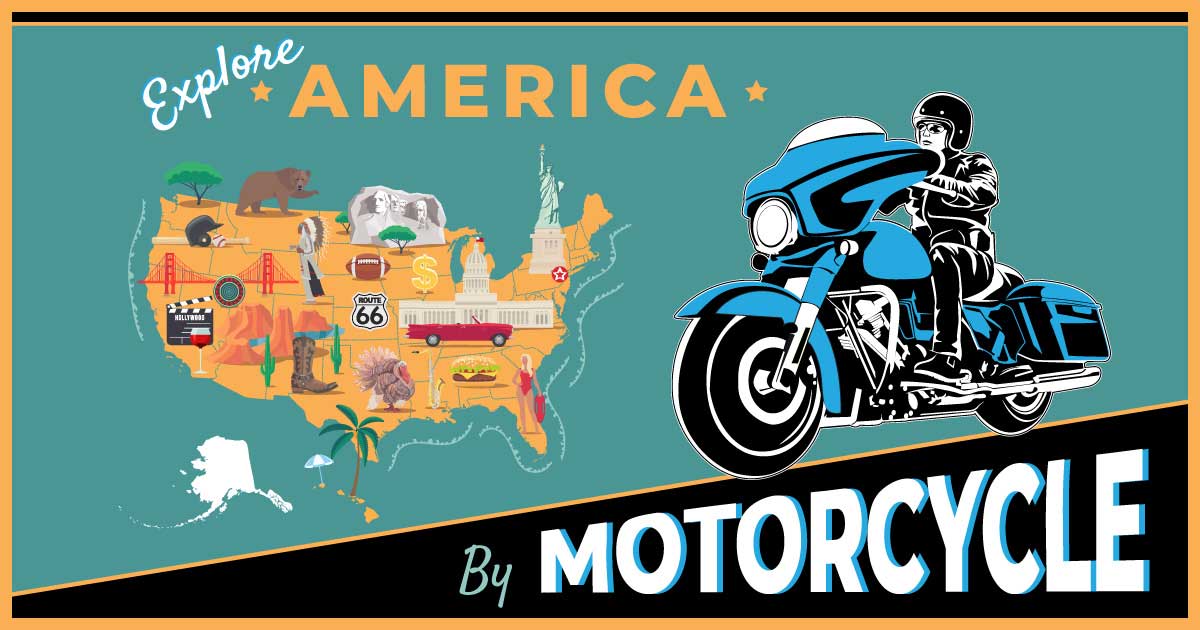
(Want to assess your options based on the cost to your wallet? Read our guide on how to find cheap motorcycle transport.)Map of the US and man riding motorcycle

Your Four Best Options When You Need to Transport a Motorcycle

When you need to ship your motorcycle from Point A to Point B, you have three main options. You can go the DIY route. You can hire a general freight shipper. Or you can choose a company that specializes in exclusively shipping motorcycles. Each comes with its own risks and rewards.

1) How to Transport a Motorcycle Yourself

Upon first glance, the DIY approach might seem like the best bet. While there are definitely some advantages to doing everything yourself, there are also some downsides you may not have considered. Let’s take a look at the pros and cons of DIY motorcycle shipping.

The Pros

You’re in control and could save money (if you do it right)

 Every rider loves to be in control; that’s one of the reasons that we ride in the first place. Your bike means a lot to you, so letting it out of your hands and into those of a stranger can feel unsettling. And then there’s the shipping schedule: by going DIY style, you can control when your motorcycle departs and reaches its destination. Moving your motorcycle yourself can also be less expensive than other options, but that depends upon distance and whether you already own a well-equipped truck.

(Want to move your motorcycle yourself? Read our quick 2023 guide.)

The Cons

Time, money and equipment costs can quickly add up

Transporting a motorcycle yourself might sound like the cheapest way to get your bike where it needs to go. But the DIY route isn’t as easy as it sounds. One of the first things you’ll need to consider is the equipment involved. Do you have a trailer or flatbed big enough to safely move your bike? How about a ramp to get your motorcycle onto the trailer? If you don’t already own it, you’ll need to purchase all the equipment—like ratchet or cam buckle tie-downs—that’s necessary to secure your motorcycle. If you scrimp on tie-downs, you could wind up with a damaged motorcycle.

As with nearly all DIY projects, getting the job done right takes more time and money than you initially estimate. (And as the adage goes, “the only thing you can’t get back is time.”) You’ll also want to factor in gas costs and the wear and tear on your vehicle when you evaluate the pros and cons of transporting your motorcycle yourself.

How to Do it

Motorcycle strapped in the back of a pickup truck
Choosing the correct angle for your straps and place them high on the bike

Take the time to do it right

If you decide to take the plunge and move your motorcycle yourself, you’ll want to make sure you take all necessary precautions. Here are a few highlights from our article on transporting a motorcycle yourself:

  • Get the right vehicle or trailer: Make sure you have a vehicle or trailer that’s properly equipped to secure your motorcycle. Most people use their own trucks. Other options include renting a trailer from UHAUL, which we’ve done from time to time, buying a motorcycle carrier or for the true DIYers, building your own motorcycle carrier. (Check out this helpful video on the DIY route and this quick article on the best motorcycle hitch carriers.)
  • Get help: Even though you’re shipping the motorcycle yourself, don’t try and load it onto your moving vehicle alone. We’ve heard of people getting seriously injured when attempting to drive their motorcycle up the ramp onto their vehicle. Find friends to help. Put your motorcycle in neutral and have a person on each side to balance the bike up the ramp.
  • Tie it down: As we mentioned above, tying down your motorcycle properly is critical to keeping it stationary, and damage-free, during transport. Start with a soft tye and find a structurally solid place to wrap it. Try the lower triple clamp or fork assembly, and avoid wires and brake lines. Make sure the strap doesn’t apply pressure to the fenders and bodywork, which is one of the quickest ways to cause damage to your motorcycle.

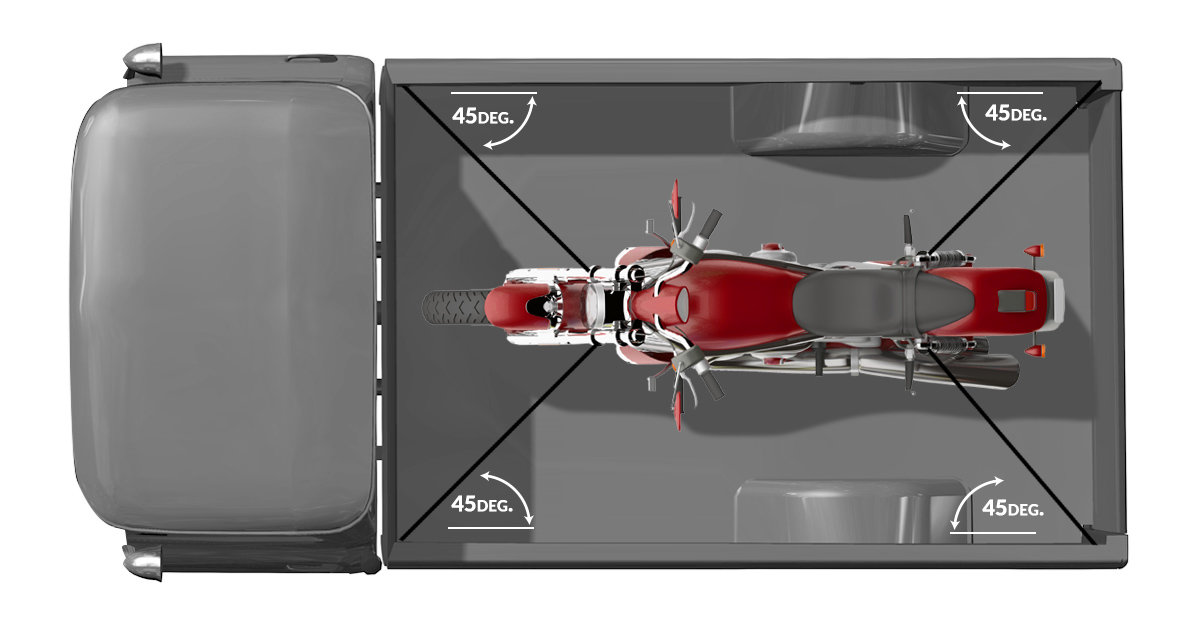
    Overhead diagram of proper motorcycle strapping locations
    Make sure you use at least 4 straps per bike, 1 from each corner
  • Check your insurance: Make sure your motorcycle is covered by your insurance just in case an accident occurs during the move.
What’s the bottom line on transporting a motorcycle yourself? If you care about keeping your motorcycle safe, you need to spend the time, and the money, to do it right. Don’t scrimp on equipment, or else you could run into damages that far outweighs the time and money involved with properly securing your motorcycle in the first place.

2) How to Transport a Motorcycle Using a Freight Company

Don’t have the time to ship your motorcycle yourself? Is speed and reliability your main focus? Are you willing to pay for speed and reliability? One option is to enlist the help of a local and/or national freight carrier. These companies specialize in moving large shipments throughout the country. A simple Google search for freight companies will turn up numerous companies offering to transport your motorcycle to your destination. There are far more of these standard freight companies out there than there are specialized motorcycle shippers (professional services).

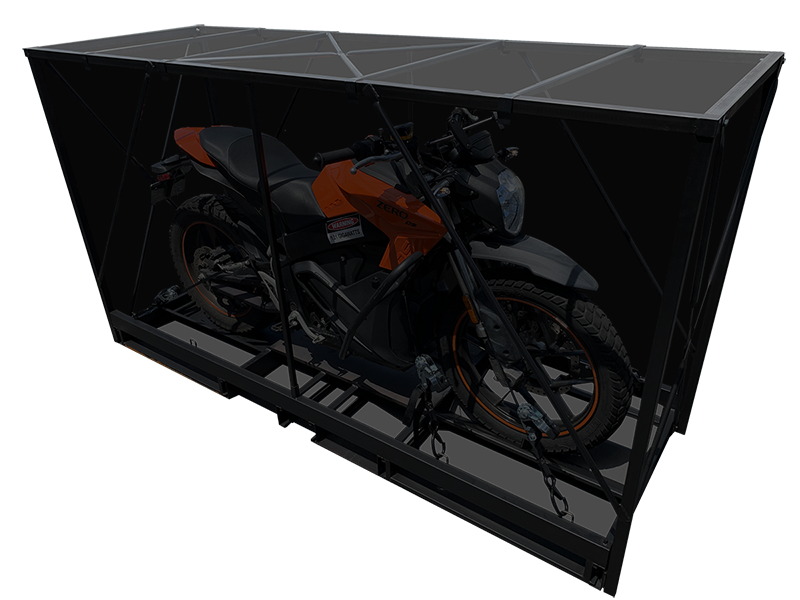
When you go this route, your bike must be loaded into a fully-enclosed wood or steel crate as it will be shipped along with other business and industrial goods. This allows the shipping company to maximize its load and minimize its costs.

The Pros
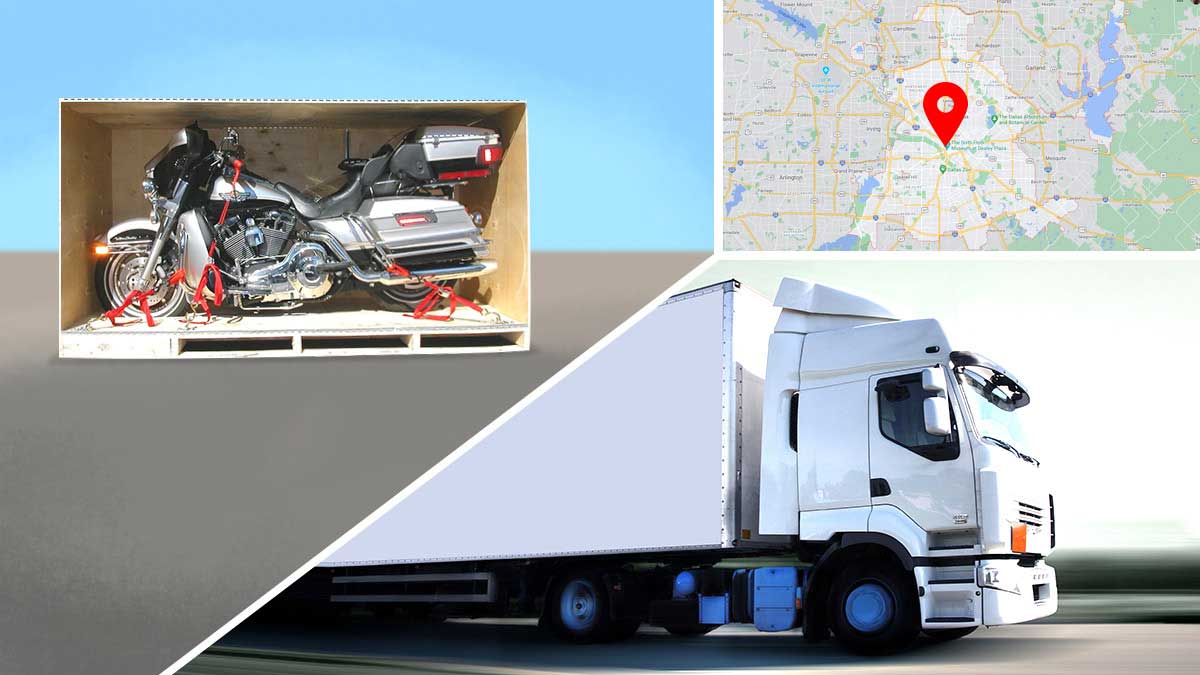
Freight Truck and Crated Motorcycle with Destination Map
Moving a bike using a freight truck requires a fully enclosed crate. The image above is for reference only.

Reliability and timeliness

While freight shippers typically lack specialized experience and equipment for shipping motorcycles, these services are generally reliable and quick. The average transit time is 3-7 days to most areas of the US. Remember, this is the transit time only and does not include the time it will take you to get the motorcycle crated and ready for transport. Because these companies make their money by being on time and providing dependable service, you can typically count on your bike arriving when it’s supposed to, and in one piece. The faster your motorcycle arrives, the sooner you can start riding.

The Cons

Cost and preparation time

There are some pitfalls to shipping your precious two-wheeled cargo with a freight company. The cost to complete the actual move is fair, but the overall cost is high because you have to supply the custom crate. Additionally, you need to make sure that you provide them with an accurate weight and dimensions when you request the quote. If your numbers are off, you will get a larger bill than expected. These hidden costs can be substantial. Insurance can also be costly and may be subject to a deductible. In some cases, insurance may not even be available from some carriers.

The time required for preparation is consumed mostly by the process of having the bike crated. Every crating service will be different, but most will take a minimum of 3 days and most will average 4-7 days to build the crate. If you can plan ahead for your shipment, this delay may be irrelevant to your needs. But if you are in a hurry to get the motorcycle on truck, it’s a serious factor to consider.

How to Do it

It all starts with the right crate

You’ll need to have your motorcycle crated and secured before a general shipper will take it onboard. You can either build the crate yourself or purchase one online.

  • Build the crate yourself: Here’s a video that walks you through the process and the materials you’ll need. Make sure that you build your crate in a well-ventilated area, and wear your safety goggles at all times.
  • Hire a company to build the crate: Your crate must be built to withstand the normal hazards of shipping. You can have a local crating service build you a custom crate that accurately fits the dimensions of your bike. This will help keep your freight costs to a minimum.
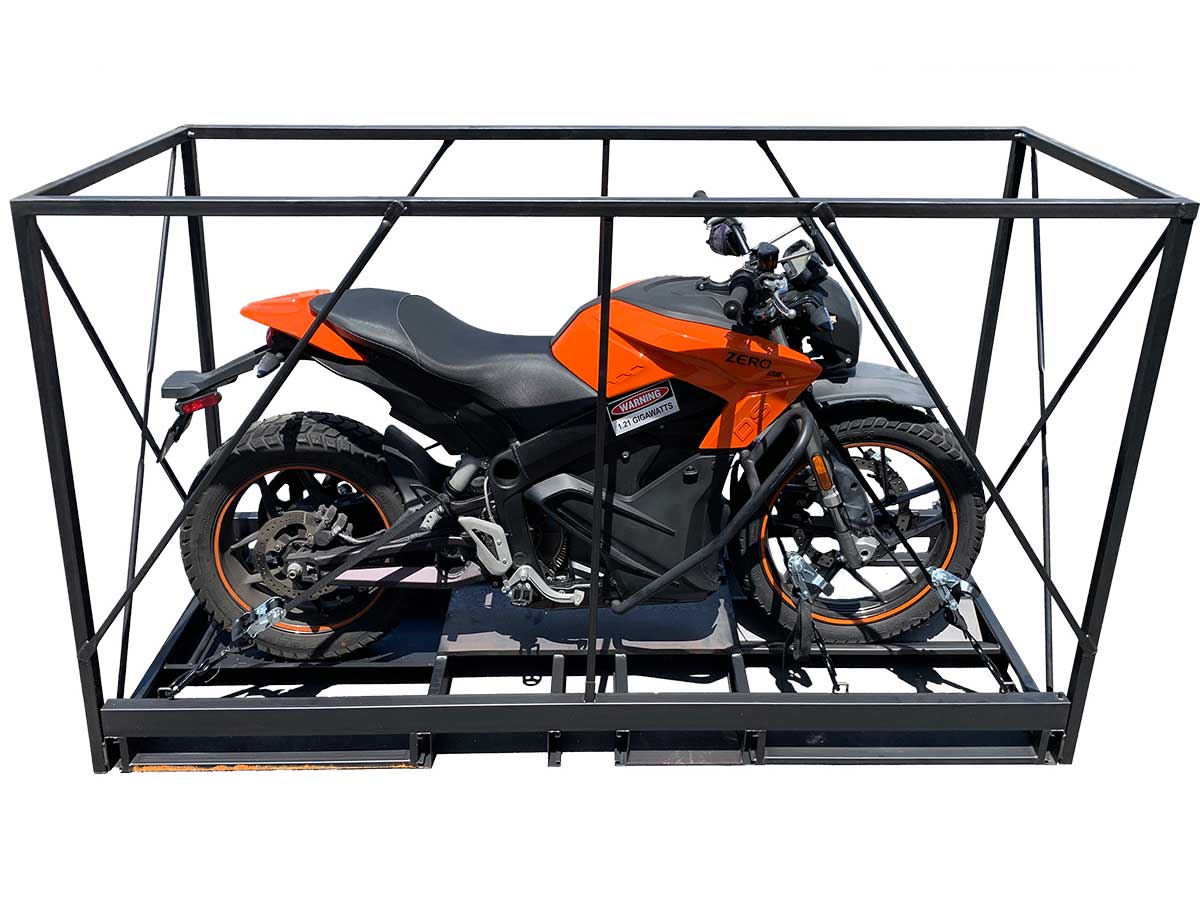
    pop up motorcycle crate
    A proper crate can be made of wood or steel


  • Purchase a pre-built crate: If you’d rather not go DIY or anticipate that you’ll need to ship your motorcycle more than once, it could be economical to purchase a crate. The best options will include motorcycle-specific features such as soft synch tie-down straps and strategically placed anchor points for easily securing your motorcycle. You can buy a pre-built crate here.
Once your motorcycle is crated, you’ll need to hire a general freight shipper, also known as a common carrier, or a trucking company that will pick up the crate and move it like normal cargo. General freight shippers are easy to find with a quick internet search. You can use a tool like Freight Quote to compare quotes from different carriers.

Once you locate your carrier of choice, pick up the phone. By asking specific questions about the service, you’ll be able to get a clearer picture of the freight company’s requirements, protocols and fees for shipping your motorcycle. An actual conversation with the company is often a better barometer for quality than online reviews alone.

3) How to Transport a Motorcycle Using an Independent Hauler

An independent service, which you often locate through a website that connects you with hard-working people willing to haul just about anything.

The Pros

Cost, usually

The gig economy is thriving these days, and it’s a true blessing to all of those who make a living working on their own as these “road warriors” work extra hard to make a fair living. There are many good websites today that can help you get connected to an Independent Service provider who will offer affordable motorcycle transport, but the final cost depends on their availability. Although they are usually on the more affordable side, prices can vary greatly and often may eclipse the cost of a more professional service.

The Cons
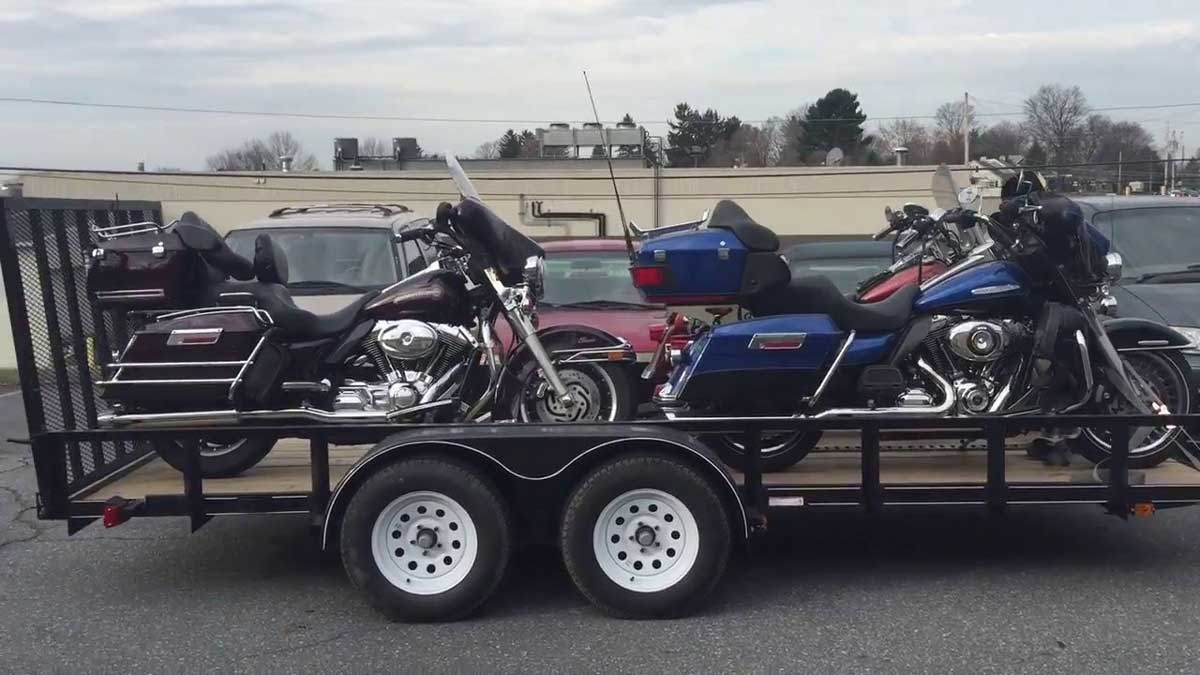
motorcycles loaded on an open trailer
Open trailers are usually a cost-effective way to move motorcycles

Familiarity with motorcycles, insurance and proper licensing

A good portion of the independent service providers are choosing to provide transport services based on their ability to match the pickup and drop-off location request. In other words, they are don’t care as much about the type of products being moved as they do the location. Many times these providers are not familiar with motorcycles and don’t know how to safely secure them. They may not even have the right equipment for the job.

In addition, additional insurance policies are virtually non-existent with the service providers. This means they may have the basic insurance they need to operate, but any damage claims might be hard to get covered. There are usually other ways to purchase this additional insurance, but it does add to the overall cost.

How to Do it

Start with asking the right questions

What type of straps do you use to secure my bike? What type of vehicle are you going to move it with, open or fully enclosed? Do you have any pictures of motorcycles that you have moved?

It is vital that you check the licensing of anyone that is offering to ship your motorcycle. This rule stands for Independent Services. All interstate carriers should be able to produce documentation proving that they are in compliance. You can verify that their license is current here on the FMCSA website.

We always recommend buying insurance or valuation coverage to cover yourself. If your motorcycle never shows up, or shows up in a less-than-pristine condition, you’re out a good chunk of change.

In addition, ask about the deductible. Some do have the option to avoid the deductible for a cost, and some don’t even have a deductible. It’s best to know the cost upfront so that it can be factored into your final decision. Lastly, get the details on how you might file a claim in the event of an accident.

4) How to Transport a Motorcycle Using a Professional Motorcycle Shipper

If you don’t want to transport your motorcycle yourself, that leaves you with independent services, freight companies and professional services. Of these non-DIY options, professional motorcycle shippers offer the most specialized experience and equipment. Here’s a quick rundown of the pros and cons of going with professionals.

The Pros

A shipper that knows motorcycles

The biggest advantages of hiring a professional motorcycle transport company are equipment, experience and ease.

  • Equipment: In most cases, a company that specializes in shipping motorcycles will have equipment that’s custom-designed to meet the unique needs of your ride. From specialty trucks to hardware and tie-downs, professional motorcycle movers will have invested in all the gear needed to get your cargo from Point A to Point B.

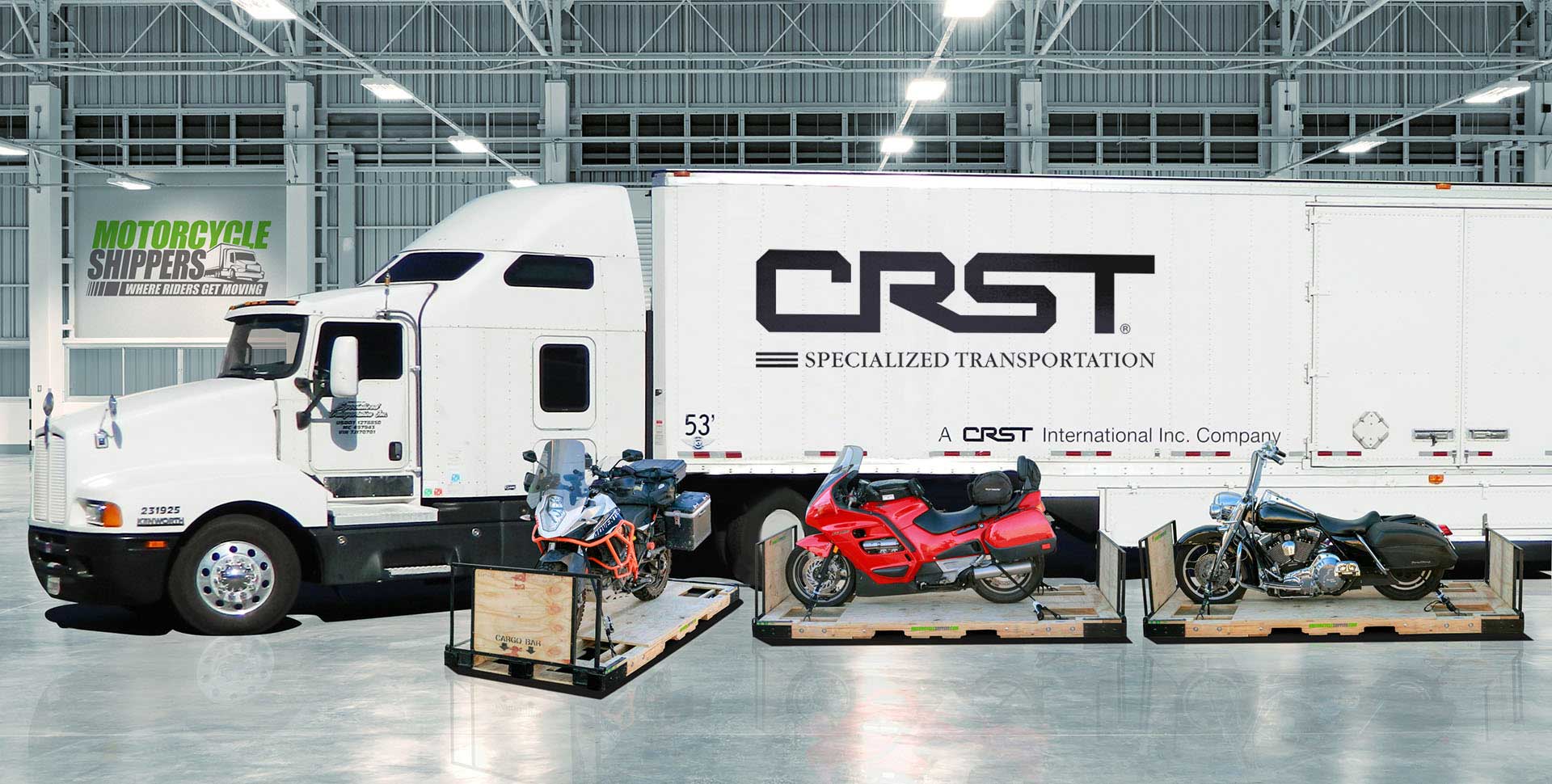
    Motorcycle shipping truck inside a warehouse with motorcycles on skids
    Professional motorcycle movers sometime use specialized equipment to help protect the bike and make handling a bit easier
  • Experience: Have concerns about extra protection for a custom paint job? Want to ship an especially large (or especially valuable) motorcycle? Does your motorcycle have a unique feature that needs to be considered during the shipping process? When you choose a professional motorcycle transport company, its team will have the experience needed to help you navigate these situations and more. Experience doesn’t just ease your mind; it also translates to a timely, damage-free process for your two-wheeled cargo.
  • Ease: With a professional motorcycle transport company, there’s no need to get a crate, get insurance or otherwise get your hands dirty. These specialized shipping companies typically provide an end-to-end service, picking up and dropping off your motorcycle from the location you choose with minimal time required from you.

The Cons

Because professional motorcycle transport companies have specialized equipment and expertise, the cost of using these services can sometimes be a little higher than doing everything yourself. However, the price will be less than using a general freight company. You might be relinquishing control of the shipping process by using a service rather than DIY, but in the end, high-quality motorcycle shippers will deliver a streamlined, safe experience that saves you time and hassle.

How to Do it

If you’ve ever searched for a professional motorcycle mover, you already know that a Google search will provide many options. But look a little more closely at those search results. You’ll quickly realize that many companies say they ship motorcycles, but most of them lack the special equipment and training to safely transport your bike. When your motorcycle matters, it’s critical to go with an expert.

Use these quick tips to ensure you choose the best professional motorcycle transport service:

  • Confirm that the company is licensed and in compliance; you can search for this yourself using their US DOT number and the FMCSA website

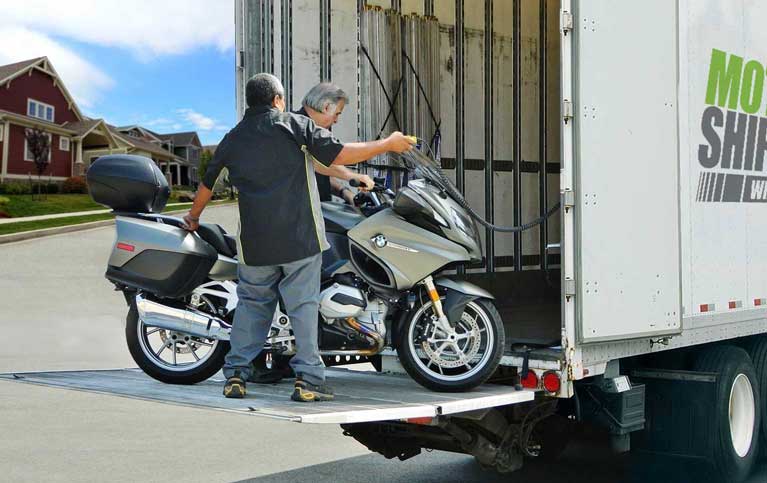
    Loading a motorcycle on a liftgate in a residential neighborhood
    Large liftgates are helpful when loading motorcycles
  • Confirm accessibility of both pickup and drop-off locations before you finalize your quote to avoid extra fees
  • Ask about the company’s equipment for shipping motorcycles; if they don’t have a clear answer, they’re not a specialist
  • Make sure that the service’s basic valuation coverage is sufficient for your motorcycle, or upgrade if it falls short
  • Confirm that the service provides online booking and tracking information
If the company has all these capabilities in place, then move forward with your quote. You should be able to get a quote for free. If a motorcycle transport service requires payment in return for a quote (or won’t be transparent about added costs), consider it a major red flag and move on.

The cost to transport a motorcycle

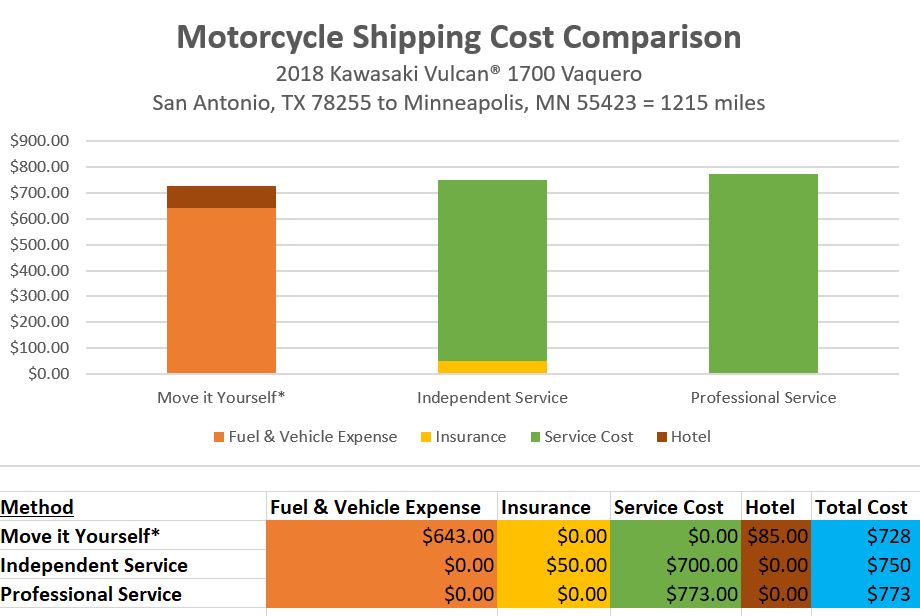
Compare the cost: You may be able to minimize the risk of damage by choosing a company that specializes in shipping motorcycles, but at what additional cost? The answer to this question will vary depending on factors like distance shipped, zip codes for pick up and delivery, size of motorcycle, season, fuel costs, etc. In short, every shipment will vary somewhat, but we wanted to help create a very simple comparison of the (3) ways to move a motorcycle:

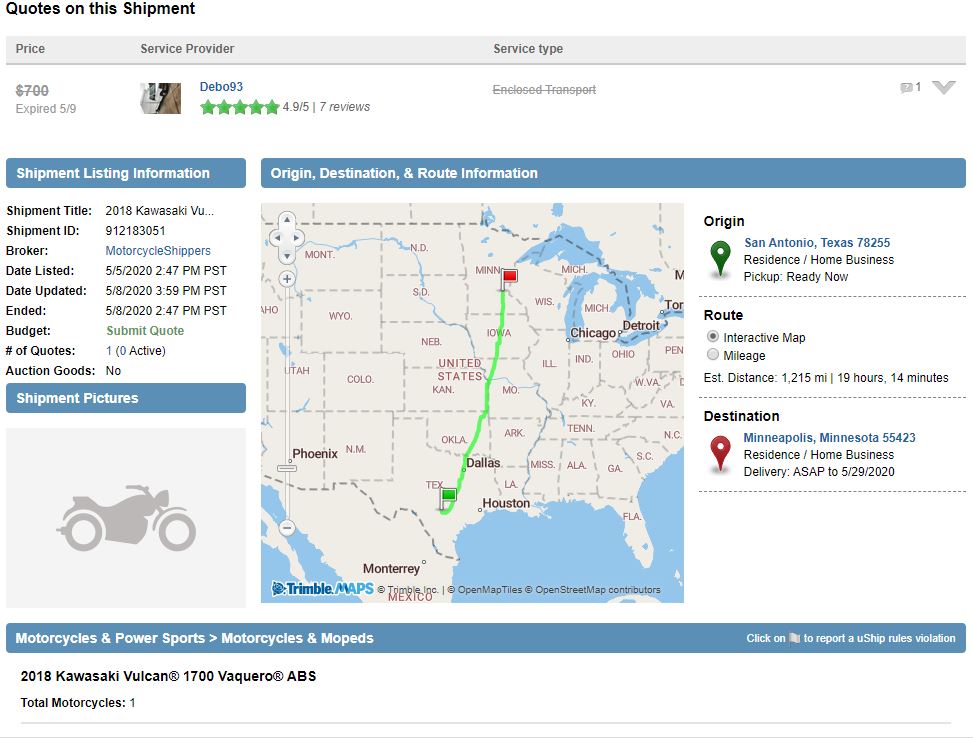
Chart showing cost comparison for motorcycle shipping methods

  • Rates were sampled on 5/5/2020

    aaa average cost per mile drive
    Average cost provided by the AAA
  • Independent Service Cost Quote
  • Average cost to drive a Pick up Truck is .53 cents/mile, based on data from AAA


The Bottom Line on How to Transport a Motorcycle

No matter the reason for transporting your motorcycle, your top priority should be to ensure your bike arrives at its destination in pristine condition. For a detailed breakdown of what professional shipping costs, see our motorcycle shipping prices page. Moving your motorcycle yourself can be a good option as long as you factor in the true costs of the process and secure the right equipment. If you forego the DIY route, you’re left with independent services, freight companies and motorcycle shipping specialists. These services offer varying degrees of experience, costs, insurance coverage and transport equipment, so it’s important to look at the full picture before deciding which motorcycle transport option is best for you.

Have you decided to use a professional motorcycle transport company? Do you have questions about how to transport a motorcycle? Motorcycle Shippers is here for you. We’re one of just two companies truly specialized in transporting motorcycles, and we love helping riders find the solution that gets them back on their motorcycle faster. When you’re ready to take the next step, our flat-rate quotes offer the transparency you deserve.

Must See Alaska Motorcycle Trip Destinations and How to Get There

Matt Ellis

Matt Ellis, Motorcycle Shippers Brand Ambassador. Armed with a laptop and camera, he can be often be found at the race track with friends and family. Motorcycle Shippers

Want to Ride to Alaska? Here’s How.

An epic ride in an amazing location far away from the hustle and bustle of the daily grind. A destination ride is every motorcycle lover’s dream—especially amid “stay at home” orders and social distancing. And if Alaska is on your “bucket list, we’ve got good news: it’s surprisingly simple (and affordable!) to get your motorcycle to the Last Frontier.

Dreaming of an unforgettable destination ride in Alaska? Consider us your copilot on the adventure. Here’s our quick rundown on shipping your motorcycle to Alaska, plus a few essential rides once you and your bike reach the 49th state.

Your Quick Guide on Alaska Motorcycle Shipping

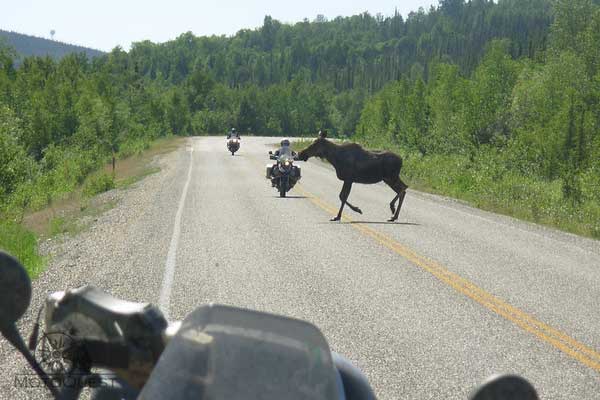
moose motorcycle highway alaska

Winding roads. Sweeping curves. Panoramic horizons and unique wildlife. Absolute solitude. We can’t think of a single reason not to plan a ride in Alaska’s wide-open plains. (That includes shipping your motorcycle, which is surprisingly simple and affordable).

At Motorcycle Shippers, we know that motorcycle transport can be daunting. That’s why we handle every detail for you. Simply give us a call, toll-free, at 1-800-730-3151 and our team will help you calculate costs, timing and all the other logistics of getting your motorcycle from your door to your destination in Alaska.

How much does it cost to transport a motorcycle to Alaska?

With our Free Shipping Quote calculator, you can find exactly how much it costs to transport your motorcycle to Alaska. There’s no hidden fees and no surprises. Simply calculate shipping from your zip code to ours (92708). Then, add $1200 to your quote to cover delivery to Alaska.

How long does it take for my motorcycle to get to Alaska?

The total transport time from your location in the continental U.S. to Alaska is about 25 business days. In most cases, we can deliver your motorcycle right to your final destination in Alaska.

How does the process work?

Motorcycle Shippers provides end-to-end motorcycle transport to all 50 states, including Hawaii and Alaska. (Want to add Hawaii to your bucket list, too? Here’s how to transport a motorcycle to Hawaii.)

When you ship with us, our service includes:

  1. Pickup: We’ll pick up the motorcycle from your desired location.
  2. Packing: We’ll pack your motorcycle safely inside our Pop-Up Crate. Your motorcycle will be fully crated and packed inside a fully enclosed container. This system ensures your ride is protected from exposure to the elements while it’s on the ship, and the crate is yours to keep for future use.
  3. Delivery: We’ll deliver your motorcycle to the port or to a pre-determined dropoff location in Alaska. (For delivery to your door, we could require you to have a loading dock or forklift. Contact our team for more details.)


Motorcycle transport is all we do—and that’s a good thing! By focusing on the unique needs of motorcycles, we ensure your precious cargo gets from Point A to Alaska in the best possible condition.

.


Our drivers load your motorcycle on our special skid system. Then, we use our Perimeter of Protection® system and high-quality soft straps to protect your motorcycle on its way to our Southern California facility. For its trip to SoCal, your motorcycle will sit inside a fully enclosed, air-ride truck.

At our Southern California facility, our experts carefully prep and crate your motorcycle for the next phase of its journey. As your motorcycle travels by cargo ship to Alaska, it will be 100% enclosed in a steel crate, which sits securely inside a steel shipping container.

How much coverage do you provide for my motorcycle transport?

Motorcycle Shippers provides $7000 in valuation coverage. If you need additional coverage, you can purchase it at the rate of $7 per $1000 in valuation. There’s no deductible, and any claims are subject to your Motorcycle Shippers Contract.

In addition to insurance coverage, we take every precaution to keep your motorcycle safe during its travels to Alaska. We use fully enclosed truck transports with air-ride suspension, and they’re equipped with extra-large lift gates to accommodate your motorcycle. Our proprietary skids and well-honed transport system are designed by riders who understand the unique needs of motorcycles and are passionate about getting your ride safely to your destination—whether it’s Alaska, Hawaii or the continental U.S.

Special considerations for Alaska motorcycle transport

When you’re ready to transport your motorcycle to Alaska, keep these details in mind. 

  • When you book an order, be sure to measure your motorcycle. Maximum dimensions for motorcycles are 90” long x 50” high x 31” wide, and there’s a minimum $500 additional charge for oversized motorcycles ( 102” long x 50” high x 39” wide max).
  • We’ll document the condition of your motorcycle when we pick it up.
  • To ship your motorcycle to Alaska, we don’t need the keys or registration.
  • Please make sure your tank is a maximum of 1/4 full at pickup.
  • For your convenience, you can also use one of Motorcycle Shippers’ terminals to drop off your motorcycle.

Three of the Best Motorcycle Rides in Alaska

And now for the part you’ve been waiting for: having your motorcycle arrive safely and ready to hit the open road. Alaska is known for great rides, but here are a few to get you started.

  • Anchorage to Fairbanks: Catch picturesque views of Mt. McKinley as you come through Talkeetna. From Talkeetna, pass through Denali State Park, which has breathtaking mountains
    mount mckinley alaska
    Mount Mckinley

    and lakes. Be sure to check out the 110 miles of unpaved roads and scenic backwoods of the Denali Highway if it’s open. (Pro tip: you’ll want to gas up in Denali, as the road to Fairbanks offers little in the way of options to do so!) From there, stop at the famous Moochers Tavern in Nenana or head straight on through to Fairbanks. The North Pole is just a few miles from Fairbanks, so be sure to explore that area once you arrive.

  • Fairbanks to Tok: As you head southeast from Fairbanks, pass through the North Pole, then through Moose Creek. Further south, you’ll find the city of Delta Junction, which is surrounded by three of Alaska’s most beautiful mountain ranges. Before arriving in Tok, stop by Tanana Valley State Forest, which offers some of Alaska’s most majestic wilderness.
  • Anchorage to Seward: Head south on Highway 1 to the city of Alyeska. Also known as Girdwood, Alyeska is surrounded by the impressive Church Mountain Range. As you head further south, you’ll come to the city of Moose Pass. Here, you’ll find Trail Lake, which serves as one of the headwater streams of the Kenai River. If you’re visiting in late summer, check out the salmon spawning grounds from the viewing decks set up overlooking the lake. From Moose Pass, it’s just about a half-hour south to Seward, where you’ll reach the Pacific Ocean.

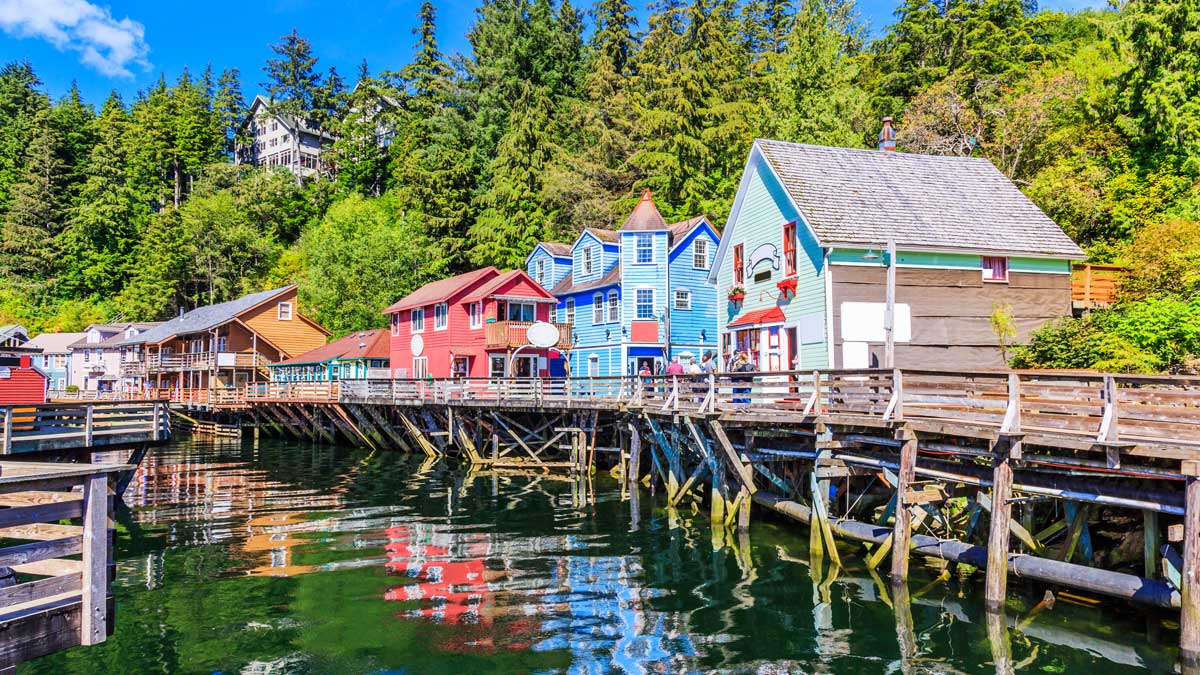
    ketchikan alaska creek street historic boardwalk
    Ketchikan Alaska Creek Street Historic Boardwalk

Want to ready more from other riders who have made trips to Alaska? Is it safe to ride? Where do I stay? This and more can be found here from Angela Murray.

Ready to cross Alaska off your riding “bucket list?” Motorcycle Shippers is here to help. Use this form to get a free shipping quote to Alaska, Hawaii or anywhere else the open road beckons. (Curious about how we keep both you and your motorcycle safe amid COVID-19? Read our policy here.)

How to Find Cheap Motorcycle Transport (and Avoid Hidden Costs)


Maybe your perfect motorcycle already costs a little more than you wanted it to. Or maybe, you got the deal of the century—well, barn finds aside—buying your motorcycle that is halfway across the country. No matter what you shelled out for your ride, one thing is for sure: no one wants to pay a fortune to ship their motorcycle.

Are you looking for the cheapest way to transport your precious two-wheeled cargo? Use these quick tips for cheap motorcycle transport to ship your bike without breaking the bank. (Because that money would be better spent on your motorcycle, don’t you think?)

What’s the Cheapest Way to Transport a Motorcycle?

It’s About More than Just the Initial Price Tag

There are 3 ways to get the job done.

  1. Move it Yourself. Get a truck or trailer and make the drive.
  2. Find an Independent Service. This is usually “a guy in a truck” who works on their own.
  3. Hire a Professional Service. These are companies who specialize in transport with multiple trucks and drivers.

Throughout this guide we will help you choose the most affordable method.

Cheap Motorcycle Transport Tip #1:

Moving a motorcycle yourself can be a quick, simple and cheap option if done correctly.

If you’ve decided to forego the DIY approach of moving it yourself  and scour the internet for a cheap motorcycle transport options there are some things to keep in mind. Whether you need to ship a motorcycle you bought online cross-country or are moving and have to get your motorcycle to your new home, these quick tips will ensure you’re actually getting the cheap motorcycle transport you’re looking for.

If you have a pickup truck, or you can borrow one from a friend then you are well on your way to using this solution. A good ramp and tie-downs are a must have, along with someone to help you load and unload the bike. We have put together a list of tips to use when moving a motorcycle yourself. This DIY option can be fun and rewarding in more than just your pocket book. It’s a road trip and it’s certain that the drive home will be just as fun as the drive there. When you get home its “Ride Time”!

Keep in mind that you will want to consider making it a 2-day trip for longer travels, and include the cost of the hotel stay in your plans. It pays to stay rested and arrive home safely.cheap motorcycle shipping

If you don’t happen to have a pickup but have a vehicle with a hitch, there are very affordable trailers available from companies like Uhaul. One model in particular has an extra wide, built-in ramp that works very well for motorcycles. Most of these trailers have the eye hooks you need to secure the bike using straps. Of course, you’ll need to buy the right tie-downs. (Hint: Go for ratchet or cam buckles, not the $10 pack from your local home improvement warehouse). Here is a good article to help you choose the right tie-downs. There is potential for damage if you don’t strap down your bike quite right. When looking for cheap motorcycle transport, you will want to factor in the value of your time, fuel, vehicle wear and tear and possibly a hotel stay. We will provide a sample later in this article to help you visualize the costs involved.

Cheap Motorcycle Transport Tip #2:

When Using Any Service, Make Sure the Driver is Licensed and Insured (and the Delivery is Tracked)

You’ve probably seen a few websites online that seem to connect you with people who are willing to haul most anything. These are referred to here as Independent Services, provided by hard working individuals who provide transport for motorcycles, cars, equipment or general freight of any type as requested.  Sometimes, this is simply the cheapest motorcycle shipping available because the person hauling your shipment doesn’t have the overhead costs that a larger company might have. It’s can be common for these Independent Service providers to show up in a pickup truck, van or with a personal sized trailer in which they load the freight.

Many times, these truckers are super responsible and get the job down just as promised, but it is vital that you check the licensing of anyone that is offering to ship your motorcycle. This rule stands for Independent Services as well as Professional Services. All interstate carriers should be licensed and should be able to produce documentation proving that they are in compliance. You can ask them for the US DOT number and verify that their license is current here on the FMCSA website.

Avoid the extra cost: Make sure the person or company offering cheap motorcycle transport is licensed and provides a way to track your shipment. In the case of using an Independent Service, your tracking may be limited to calling the driver for updates, so make sure you have the drivers phone number.  More importantly, make sure that you have verified their phone number by calling them before your motorcycle is actually picked up. This exercise simply increases the chances of your bike arriving safely—and saves you from the considerable costs of dealing with a damaged or MIA motorcycle.

Cheap Motorcycle Transport Tip #3:

Go for the Expert

When your motorcycle is being shipped accidents can happen. No matter whether you choose and Independent or Professional Service, if you choose a company that doesn’t have experience with shipping motorcycles, that risk increases exponentially.

Motorcycles have unique designs and equally unique shipping needs. Take tie-downs, for example. A failed tie-down could cause anything from scratches to major damage. But to someone who doesn’t know motorcycles, tie-downs might not seem like a big deal. The straps you choose, and how you use them, also impacts the ability to transport a motorcycle safely.

Pro Tip: Your transport company should be using at least four straps, and the hooks should never contact your motorcycle.

A motorcycle shipping expert will also be able to help you determine whether your bike can be loaded and moved safely in an open or closed trailer. But since we’re on the topic, here’s a good rule of thumb: if your motorcycle is being shipped a long distance, is fragile and/or holds value, go with a closed trailer. It keeps your motorcycle safer and stops the elements from damaging your finish. If you are moving a dirt bike or other off road vehicle that may already have some scratches or other damage, an open transport might be a good option for you.

Here’s a quick checklist of equipment that your motorcycle transport company should provide:

  • Specialty trucks that are equipped with a lift gate or similar loading-assist function. If a lift gate is not available, secure ramps for safe loading and unloading may suffice as well, but they must be wide enough to safely navigate the bike with someone walking along side. Air-ride suspension or a similar design that doesn’t bounce your motorcycle while in transit. Constant movement of your bikes suspension while in transit can cause unnecessary wear on your shocks, forks and seals.
  • Hardware that is specialized for the needs of shipping motorcycles. Some companies use skids or custom pallets to help ensure safety. Other companies may have wheel chocks, spacing bars or harnesses that work to keep the motorcycle from moving during transport.
  • Tie-downs that protect fragile finishes. As mentioned previously, handlebars and other fragile areas of your motorcycle should never be secured with metal hooks. Good tie downs have soft nylon soft ties that won’t mar the finish.

At the end of the day, choosing a transport company that’s well-equipped to ship motorcycles increases your chances of receiving your bike in the same condition as when it was shipped. That’s good news for your motorcycle and your wallet.

Compare the cost: You may be able to minimize the risk of damage by choosing a company that specializes in shipping motorcycles, but at what additional cost? The answer to this question will vary depending on factors like distance shipped, zip codes for pick up and delivery, size of motorcycle, season, fuel costs, etc. In short, every shipment will vary somewhat, but we wanted to help create a very simple comparison of the (3) ways to move a motorcycle:

cheap motorcycle transport cost comparison
Cost comparison done on May 5th, 2020.
  • Professional Service Cost rates were sampled on 5/5/2020

    aaa average cost per mile drive
    Average cost provided by the AAA
  • Independent Service Cost Quote
  • Average cost to drive a Pick up Truck is .53 cents/mile, based on data from AAA


Cheap Motorcycle Transport Tip #4:

Watch for Additional Fees (and Go Door-to-Door if Possible)

To confirm you’ve actually found a cheap motorcycle transport option, pay close attention to all the fees that the person or company is including in its price. Additional fees are more common to see when using a Professional Service. Some common fees include:

  • Rural or “beyond” fees based on pick up or delivery locations
  • Oversize motorcycle charges for large bikes
  • Fuel surcharges based on the Diesel Fuel Prices posted by the EIA
  • Toll road Fees
  • Lift gate fees
  • Insurance fees
  • Residential fees for door-to-door shipping
  • Attempted delivery fees. This happens when you are not available to meet the driver, or the driver cannot access the location.
  • Storage fees. These can occur when the bike cannot be delivered on schedule, most often related to an attempted delivery as stated above.

Pro Tip: Many Professional Service providers offer a door-to-door shipping service. This is obviously the most convenient option and may not even cost you any more than a service that utilizes a one of their terminals, but many times you need to ask for it. If a door-to-door pickup and drop-off is not something they offer, make sure you agree to both locations before finalizing your quote. Otherwise, you could be facing additional fees for accommodating your location. You see, some companies use large trucks won’t fit on smaller streets, and some don’t offer service at all to high density “down town” locations or remote areas. This could also mean that your shipment is delayed. All of the frustration that comes with a “surprise” on your final invoice.

Avoid the extra cost: Confirm the specific details of your requested pick up and delivery locations when you book the order. That way, any additional fees will be clear before you get the invoice.

Cheap Motorcycle Transport Tip #5:

Get the Right Type of Insurance

Almost all Professional Service providers offer some sort of insurance or valuation coverage and some even include it in the price. Some Independent Service providers offer coverage as well, but more often than not, you will need to inquire about the coverage and the cost. Most commonly, the cost is not included in the price.

When you’re assessing the true cost of your cheap motorcycle transport solution, it’s also very important to give the providers basic coverage a second look. Does it cover everything that you need? That answer won’t always be “yes,” especially if you have a valuable motorcycle.

It’s better to be safe than sorry, especially when it comes to your motorcycle. Ask the motorcycle transport provider about its insurance or valuation coverage and what isn’t included in its base-level coverage.

The gig economy is thriving these days, and it’s a true blessing to all of those who make a living working on their own. There are many good websites today that can help you get connected to an Independent Service provider who will offer cheap motorcycle transport and deliver your motorcycle without a scratch. But when using these services, we always recommend buying insurance or valuation coverage to cover yourself. It’s an added cost but it’s important to remember that the service provider or website that you used may not take responsibility if something goes awry. And if your motorcycle never shows up, or shows up in a less than pristine condition, you’re out a good chunk of change.

Pro Tip: Ask about the deductible. Many policies have a deductible and some may not mention it up front. Some do have an option to avoid the deductible for a cost. As with every other aspect of motorcycle transport pricing, it’s best to know the cost up front so that it can be factored into your final decision. In addition, get the details on how you might file a claim in the event of an accident. Having coverage is one thing, but how long will you have to wait to be paid?

Avoid the extra cost: This does highlight a major hidden cost of motorcycle transport: the cost of something going wrong. Choose a motorcycle shipper that includes insurance or valuation coverage that matches your budget. Then, ask questions so that you understand whether the basic insurance coverage is sufficient or needs an upgrade.

motorcycle riding hawaii
Getting the best shipping deal feels almost as good as the open road.

The Bottom Line on Cheap Motorcycle Transport

“I want to deplete my rainy-day fund to ship my motorcycle.” – Said No rider, ever

You’ve invested time and money into your motorcycle. And now, you’re paying to ship it hundreds, or maybe even thousands, of miles. By spotting red flags, asking the right questions and being smart about shipping locations and fees, you can make sure that what seems like a great offer is actually the best motorcycle transport option.

Your Motorcycle Wants To Ride Hawaii, Too

Posted By

Matt Ellis

Matt Ellis, Motorcycle Shippers Brand Ambassador. Armed with a laptop and camera, he can be often be found at the race track with friends and family. Motorcycle Shippers


So you’re planning a trip to Hawaii? The beauty, the culture, the twisty roads with scenery unmatched anywhere … you can’t wait to experience this with your spouse, but don’t you think your bike would like to enjoy it, too?

Sure, you could fly to paradise and rent a bike to see the yellow hibiscus in full bloom, or hear the call of the nēnē, but what would that be like? Rattling around on a clapped-out, underpowered, two-wheeled equivalent of some bad carnival ride, trying to find position in the uncomfortable cheek-indention of the last 100 riders?

No. You love riding. You love your bike. And let’s face it … you’d love to ride your bike in Hawaii.

Fortunately, we can make that possibility a reality!

We know that you’re a great rider, but building enough speed to hydroplane the Pacific is pretty unlikely and the chances of actually jumping a shark like Fonzie are slim, so we’ve created an easy means of shipping your motorcycle straight to Honolulu, so that your bike will be there waiting when you arrive!

Our 1-step process is easier than getting yourself to the islands, (and you don’t have to wait in lines). Simply give use our Instant Shipping Quote tool on the website to calculate your cost. You can also give us a call, toll-free, at 1-800-730-3151 and we’ll give you an all-inclusive quote for getting your bike safely to the Aloha State. Then, when you’re ready to send her, we pick up the bike at your door pop up motorcycle crate wrapped readyand take it all the way to the port in Honolulu. Yep, it’s that easy!


The Process

We’re riders, too. We love our bikes and we know you love yours … after all, you’re taking it on a Hawaiian vacation!

With this in mind, we use a motorcycle creat that provides a Perimeter of Protection® and includes soft straps, to keep your ride safe during transport.

Once your bike is safely tucked-in, our team arrives with a specially-equipped, air-ride transport truck that is fitted with a motorcycle-friendly lift-gate to give your motorcycle a first-class lift to paradise!

We’ll transport your steed to the port in So-Cal, then further protect her within a fully-enclosed steel crate and load that into a steel shipping container so she can safely enjoy her cruise to Hawaii! (Okay, it’s a cargo ship, not a cruise line. Admittedly there won’t be any sunbathing or shuffleboard, but your bike will be very well protected against the harsh elements while onboard).


And Now, To Ride …motorcycle riding hawaii

That’s it! The entire process takes roughly 25-days and you’ll enjoy a lifetime of memories with the wind in your hair as you take in some of the most breathtaking scenery this planet has to offer, while riding your motorcycle through Hawaii!

While there, you might consider one of the many options for island-to-island transport so that you can ride out to see the best scenery! There are a few spots we’d definitely recommend visiting throughout the state …

Be sure to check our Waimea Canyon, also known as the “Grand Canyon of the Pacific.” This beautiful gorge is over 10-miles long, 3,600 feet deep and it’s covered with lush greenery! There’s plenty of opportunity for hiking and off-saddle sight-seeing, so bring a picnic lunch and your hiking gear! Part of the Koke’e State Park, there are lots of things to see and do, including the Pu’u Hinahina Lookout that will leave you mesmerized! Oh, and don’t forget your camera!

If you get out to the Garden Isle of Kauai, you’ve gotta check out two spots that will forever remain etched in your memory and call you back again. Ke’e Beach has an amazing view of the virgin wilderness of the Na Pali coast and is teeming with wildlife – both on shore and beneath the waters! This is also the entrance to the Kalalua Trail, which is 11-miles of the most beautiful, (and most dangerous), hiking in the world, so be prepared to be adventurous, but use caution!

Also on Kauai, you’ll find some of the most beautiful waterfalls anywhere in the galaxy. (Well, at least on this planet). For those old enough to remember Herve Villechaize’s character “Tattoo” yelling out, “De Plane, boss! De Plaaaaane!” at the beginning of the 1970’s TV Show Fantasy Island, you’ll instantly recognize Wailua Falls. This majestic waterfall is a 173 foot high cascade located on the South Fork of the Wailua River near Lihue. With walking trails leading to the pool at the base, this fall was used for generations of Hawaiian natives as a death-defying leap to prove their transition into manhood. (Some still do, although it’s illegal, so we don’t recommend it!)

And, of course, a trip to Kauai isn’t complete without reliving the opening of the 1993 Steven Spielberg hit movie Jurassic Park by visiting Manawaiopuna Falls in the Hanapepe Valley. Granted, this is a privately-owned fall, so unless you’re tight with the owners, (check your contacts list!), you won’t be able to splash around in its waters, but this 400-foot tall fall that was featured in many shots of the classic dino movie is a heart-stopping sight from many places throughout the valley!

And, should you decide to splurge on one of the many available helicopter tours on Kauai, you’ll experience this fall like nothing else! With at least one of these tours, you hear the recognizable movie soundtrack begin to play in your headphones as you slowly fly over the edge of the fall and descend next to it’s 400-foot shower, experiencing the arrival to Jurassic Park first-hand, just as Jeff Goldblum did in the movie! (Sadly, your motorcycle will have to remain parked at the heliport pad).hawaii botanical garden

Lastly in this very abbreviated list of Hawaii “Must-Sees,” there’s really no point in taking your bike to the isle of Maui, if not to experience what National Geographic referred to as a Drive [Ride] of a Lifetime on the Road to Hana. Make sure you top-off the tank first, because you’re about to experience over 50-miles of breathtaking scenery; wind through more than 600 twists and turns; and cross close to 60 bridges; all of it packed with waterfalls, exotic wildlife & flora and amazing views of the Pacific whispering with her waves at every corner!

And while you ride this amazing stretch of wonder, be sure to save time for a few stops along the way. Grab some fresh pineapple or other locally-grown indigenous fruits at the Twin Falls Maui Farm Stand before walking out to witness the Twin Falls Maui Waterfall. Stop at the Garden of Eden Arboretum & Botanical Gardens to feel even more of Jurassic Park, seeing the setting for much of the movie’s backdrop, (but watch out for the T-Rex … we hear she can be rather cranky). Honomanu Bay is also a must as you let the ocean’s gentle waves pull the sand from between your toes and, if waterfalls are your thing, make sure you stop at both the Upper Waikani Falls and Hanawi Falls to get the most of your adventure in paradise!

Back to the Grind

Don’t worry, you don’t need to sell off your motorcycle in Hawaii! Just bring it back to the port at the end of your Hawaiian adventure, load her back into your motorcycle crate and we’ll do the rest!

Rules and Stuff

There is, of course, a size restriction for motorcycles shipped to Hawaii. As long as your bike is a maximum of 90” long X 50” Tall X 31” wide, she’ll fit just fine, but please measure your bike prior to booking your order. (There is an additional charge for oversized bikes, just contact us for more info).

Your bike will remain fully-crated throughout her journey to the islands for your protection, AND we provide $7,000 of zero-deductible valuation coverage with every shipment. (If you’ve got one of those high-dollar custom rides, you can also purchase additional coverage for just $7 per $1,000 valuation). How’s that for peace of mind!

The pick-up address of origin must be tractor-trailer accessible, but if you live on a really tight street, or in a treehouse or something, you can always drop off your bike at one of our terminals for shipment, or have it shipped from a friend’s house or even meet us at a business location, (uh, a business you own or work at – or at least have permission in advance, otherwise things can get a little awkward).

The entire process to Hawaii takes about 25-days, so be sure to call us in plenty of time and give your bike an extra hug before she leaves. She’ll miss you, but considering the destination … well, let’s just say it’s more than worth the wait!

Plus, when all is said and done, the crate is yours to keep to use for a future shipment! I mean, once you take your bike on a Hawaiian vacation, it’ll never let you go anywhere without it again. But then, that’s what we’re here for.

Planning a Safe Motorcycle Group Ride: Your 2024 Guide

Posted By

Danny Reyes

Danny Reyes, Shipping Specialist, rider advocate and Angels fan. [email protected]


8 Things to Keep in Mind When Planning Your Next Big Ride

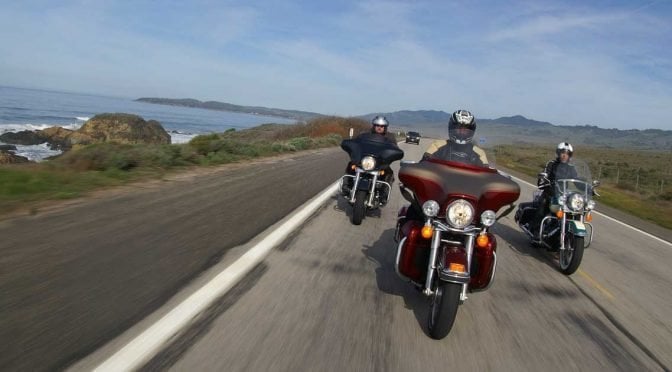
Group riding is some of the most fun motorcycle enthusiasts can have together. Taking a typically solitary activity and making it communal can completely change the way you experience your bike and the wide, open road. And if you’ve been in the game for a while, you already know that few things in life are quite as enjoyable as talking bikes with your fellow riders. But, whether it’s a two-man haul across the country or a charity rally across town, the rules are a bit different when riding as a pack. Here are some key things you need to keep in mind when you’re joining a group.

  1. Communicating Can Be Challenging—Sending a message from one rider to the next is one of the most valuable components of group riding. You’ll be able to alert one another to what’s ahead, whether that be a traffic jam, a thunderstorm, or a hazard in the roadway. Those old-school hand signals are still important to know, but it’s not enough to rely on them when you want to report to your lead rider from the core of the pack. One of the best ways to stay in touch with other bikers is to invest in a motorcycle intercom system so you can talk to one another as you ride.
  2. You Need to Have a Plan Upfront—Don’t just show up in a parking lot with a bunch of your buddies and throw together a big group ride. You need to plan out a route beforehand and, depending on the size of your group, maybe even let the local authorities know. On an individual level, make sure to show up to any rally raring to go. That means you’ve got a full tank of gas and a full belly! Remember, pulling off for refueling isn’t as easy when there are several other riders to consider.riders together at a rest stop
  3. You Need a Leader and a Follower—When you’re embarking on your first group cruise, it helps if you designate a leader (the lead rider) to cruise at the head of the pack and a follower (the sweep rider) to serve as the final member of the group. These two riders serve as the bookends of the crew and help maintain a reasonable distance between your guys and the rest of the traffic. They will also help deliver any important messages to the core. For these reasons, it’s important that you pick two of your most experienced and confident riders to serve as the lead and sweep riders.
  4. The Staggered Formation Is Ideal—One of the first things you’ll come across when researching safe methods of group motorcycle riding is the staggered formation. This formation requires riders to stagger in a zigzag pattern across a single lane, leaving a two-second space (when riding at highway speeds) between you and the rider directly in front of you and a one-second space between you and the rider diagonally in front of you. This will help ensure that everyone has enough room and time to react should a hazard come about.
  5. It’s Vital to Know Everyone’s Experience Level—Try to position riders based on their experience level. The first few bikes should be operated by your top dogs—the riders who have logged thousands of miles over a dozen or more years—while the core of your group should be made up of newer riders who are prepared to fall in line and learn as they go. This is one of the reasons why it’s so important to get your entire group together before you actually kick off for your journey.
  6. Keep it Small, Especially at First—You don’t have to host a Sturgis-level ride every time you get your buddies together to cruise. In fact, it’s better if you don’t. For optimal safety, we recommend sticking to between two and six riders at a time. The smaller the group, the easier it will be to communicate with one another and make adjustments based on traffic, weather, etc. It’s also nearly impossible to keep big groups together on longer journeys, so keep it small at first. If you have more than six riders, consider breaking off into smaller groups.
  7. Designate a ‘Breadcrumb’ Rider—In group riding, separations are inevitable. When this happens, it helps to designate a drop-off rider, also known as a breadcrumb, to help keep the group together. When riders become separated but the group must change course—such as make a turn or pull off an exit—the drop-off rider will stay behind to let the others know which way to go. By following this strategy and leaving “breadcrumbs” along the route, everyone will remain together until the very end.riders enjoying the view of a sunset
  8. Keep it Slow and Follow Traffic Laws—This is one of those times when you need to abide by every single traffic law, as it’s one of the things that keeps you safely together when you’re motoring as a pack. Think about it like this: Traffic laws can actually help keep you in sync since they keep everyone traveling at roughly the same speed while also keeping your whole group on the same stop-and-go schedule. Remember: Communal rides are not the time to speed, showboat or practice your latest tricks. If you want to get invited back, go slowly and follow the leader.


Don’t let a little planning deter you from getting out and hitting the pavement with your mounted brothers and sisters. Group motorcycle riding is one of the most rewarding activities out there for both newbies and seasoned gearheads, and it’s a true rite of passage for all dedicated bikers. As long as you follow these helpful tips, you can be sure every group cruise will result in fun memories!

8 Unwritten Rules of the Road Every Motorcyclist Should Know

What are the rules for riding a motorcycle?

Just like any sport or hobby, riding a motorcycle comes with two sets of rules—the written and the unwritten, and it’s a lot easier to learn the former than the latter. Unfortunately, there are no classes, guidebooks or seminars on the unwritten laws of riding. Oh, and you definitely won’t be tested on them when you go to get your motorcycle license. Learning the rules of the road and biker culture takes years of cruising and interacting with other two-wheel enthusiasts. But the following list can help you get a glimpse into what you’ll learn when you start to master the road.

    1. A. Don’t Ask to Ride Someone Else’s Bike

      Referred to as The Natural Law of Motorcycling, this is one of the rules you’re going to want to take seriously if you’re new to the community. Asking to take someone else’s motorcycle for a spin puts them in the position of having to say no, so just don’t do it. No one wants to loan another rider his or her bike because it’s a big liability, and riders have things just the way they like them, not the way a random borrower might. Plus, it’s just bad manners all-around.

    2. Pro Tip: Want to try a new bike? Head to a dealership or bike rental service to experience different models without putting friendships on the line.
    3. B. Always Alert Fellow Riders of Hazards

      Many of the unwritten laws of riding come down to the same concept: look out for one another. Whenever possible, keep your fellow bikers in the know about what’s ahead—a speed trap, a particularly gnarly pothole, a traffic jam, deer—either via motorcycle Bluetooth communication if you’re cruising with a group of riders you know or through old-school hand signals (see below) to keep strangers in the other lane safely clued in to what’s ahead.

    4. Common Hand Signals:
      • Tap on the helmet: There’s a police officer or speed trap ahead.
      • Pointing at the ground: Hazard in the road—watch out for debris or a pothole.
    5. C. Know Rider-to-Rider Communication

      Even if it’s your first day as a licensed biker, you already know that there’s a secret language that goes on, bike to bike, out on the road. But you may not know that there are both written and unwritten hand signals you need to know. Of course, there are the ones you learned in driver’s ed, such as a straight, extended arm to signal a left turn or a folded-down arm to signal a stop. But then there are the ones you learn through years of communication with fellow bikers, like a tap on the helmet to alert your fellow riders of a cop or speed trap ahead. Don’t worry if you don’t get it all on your first ride—this is a language you pick up as you go.

Biker Signal How to Execute What It Means
Left Turn Extend your left arm straight out. Indicates the rider is turning left.
Right Turn Extend your left arm out and bend it upward at a 90-degree angle. Indicates the rider is turning right.
Stop Extend your left arm out and bend it downward at a 90-degree angle. Indicates the rider is stopping or slowing down.
Speed Up Raise your left arm with a fist, then move it upward repeatedly. Indicates the group should increase speed.
Slow Down Extend your left arm down and move your palm up and down. Indicates the group should reduce speed.
Hazard in Road (Left) Point with your left hand toward the hazard. Warns riders of a hazard on the left side of the road.
Hazard in Road (Right) Point with your right foot toward the hazard. Warns riders of a hazard on the right side of the road.
Follow Me Raise your left arm and point forward. Signals the group to follow the lead rider.
Single File Raise your left hand with one finger extended upward. Signals riders to form a single file line.
Double File Raise your left hand with two fingers extended upward. Signals riders to form a double file line.
      1. 1. Should You Wave at Your Fellow Riders?


        Another important hand signal to know? The wave. Legend has it that the bike-to-bike wave started back in 1904 when William Harley and Arthur Davidson (yes, that Harley and Davidson) passed one another and gave a friendly wave. There are many variations on the biker’s salute, with the most common being two or three fingers pointed downward at a 45-degree angle, but there are tons of unique and regional versions out there. The motorcycle wave is all about showing solidarity and forging a connection among your fellow riders.

      2. 2. Stop to Help a Fellow Rider?

        Many of the unwritten rules of the road for bikers center around helping each other and forging a sense of community. You always want to make sure you stop and assist a fellow biker—or, any motorist, for that matter—in need. If you see someone who may be in distress or if you’re traveling through a dangerous area, such as a steep mountain pass or a rural road where there’s no gas station for miles in either direction, you may want to flash a thumbs up or down to make sure other travelers know you’re okay and vice versa. However, always assess the situation for your own safety first. If the area seems unsafe or suspicious, keep your distance and offer assistance by calling emergency services instead. Your safety should always come first.

      3. 3. How Do You Respect the Road and Others?

        As bikers, we know we stand out from the typical commuter rocking his grocery-getter, but we shouldn’t be at odds with him. Always practice defensive driving and make sure to give other cars and motorcycle riders plenty of room. Don’t hesitate to help them out by letting them in or waving them ahead of you. Simple gestures of courtesy can go a long way in fostering a positive relationship between bikers and other motorists.

        Just remember that drivers may have trouble seeing you or staying out of your lane, so ride defensively and remain visible whenever possible. Use reflective gear, maintain a safe following distance, and avoid lingering in blind spots. Anticipate unpredictable behavior from other drivers, especially in heavy traffic or poor weather conditions, and always be prepared to react calmly and safely.

      4. Additionally, respect speed limits, obey traffic laws, and avoid weaving in and out of lanes, as this can create tension on the road. When riding through residential areas or near pedestrians, lower your speed and reduce noise levels to show consideration for others. Being a responsible and respectful rider not only keeps you safe but also improves the public image of motorcyclists, contributing to a safer and more harmonious road experience for everyone.
      5. Quick Tip: Stay out of blind spots and make eye contact with drivers when possible. Wearing bright gear and using reflective decals can also increase your visibility.
      6. 4. Why Stay in Formation During Group Rides?

        Group of motorcycle riders riding together at sunset in a staggered position.
        This is one situation where a biker-to-biker headset really comes in handy. When you’re riding as a group, you need to stay in a safe, roomy formation—ideally, in a staggered line with a two-second distance between you and the rider directly in front of you—in order to keep everyone together without crowding or encroaching on the rest of traffic. It can be difficult to maintain a neat formation when you’re going for longer group rides, but knowing your hand signals or having a reliable Bluetooth system can go a long way in this situation.

      7. Safety Tip: Two seconds of distance between you and the rider in front of you will give you enough time to react if they brake suddenly or swerve to avoid an obstacle.
      8. 5. Why Are Bikers Good Community Members?

        Know that you can rely on your fellow riders; they’re generally not dangerous gang members. Many motorcycle clubs dedicate significant time and effort to raising money for charitable causes in the community, from organizing toy drives for children to supporting veterans and local hospitals.

        Additionally, bikers often band together to support one another during emergencies or accidents, demonstrating a strong sense of camaraderie. Most importantly, by simply mounting a bike, you become an automatic member of that community, which comes with a responsibility. Following laws, being courteous to others, and assisting fellow riders in need help foster a positive image of motorcyclists.

        Engaging with the community, participating in local events, and advocating for motorcycle safety also contribute to making bikers a valued part of society. When you ride with respect and uphold the values of your community, you’ll be a welcome addition to any region’s motorcycle culture.

    The Most Important Rule? Learn as You Go

    One of the biggest mistakes young and novice riders tend to make is pushing themselves too far beyond their limits too early. This applies to everything from taking hairpin turns at high speeds to learning the best way to convey important information to other riders on the highway. As you enter the world of riding, keep your ears and eyes open so you pick things up as you go and never find yourself in a dangerous, awkward or uncomfortable situation.

    Remember: Every mile on the road is a learning opportunity, so stay humble, ride safely, and embrace the culture.

    Final Thoughts from the Road

    Riding a motorcycle isn’t just about getting from point A to point B—it’s about the freedom, the connection with the road, and the sense of community with fellow riders. From learning the unspoken rules to mastering hand signals and riding in formation, every experience makes you a better rider. The road teaches you lessons you can’t learn anywhere else. Whether you’re helping a fellow rider in need or sharing a wave with someone passing by, it’s all part of what makes motorcycling so special.

    Happy riding, and may every mile be a safe one!


    It Takes Just Seconds to Get a Quote

    If you’re ready to take your motorcycle distribution to the next level, get a quote today and see how Motorcycle Shippers can help you optimize your operations. With their expertise and experience, you can be confident that your bikes will reach their destinations quickly, safely, and efficiently, allowing you to focus on what you do best—growing your business.

    More Great Resources from our Team to You

    CHECKLIST FOR BUYING A USED MOTORCYCLE

    SHOULD YOU TRUST CONSUMER REPORTS MOTORCYCLE RELIABILITY STUDY?

    HOW TO FIND CHEAP MOTORCYCLE TRANSPORT (AND AVOID HIDDEN COSTS)

    HOW TO TRANSPORT A MOTORCYCLE | GUIDE WITH COST

    Posted By

    Clint Lawrence

    Clint Lawrence, founder of Motorcycle Shippers. Helping give riders more freedom to enjoy the bikes they love.

2019 Motorcycle “Lane Filtering” Law, Explained

Posted By

Clint Lawrence

Clint Lawrence, founder of Motorcycle Shippers. Helping give riders more freedom to enjoy the bikes they love. [email protected]

The State of Utah usually brings to mind Mormons and mountains, but the most recent legislative session has added a third “m” to that list: motorcycles. Since May 14, 2019 motorcyclists in Utah have been given the ability to legally practice “lane filtering,” thanks to a new bill signed into law by Gov. Gary Herbert back in March.

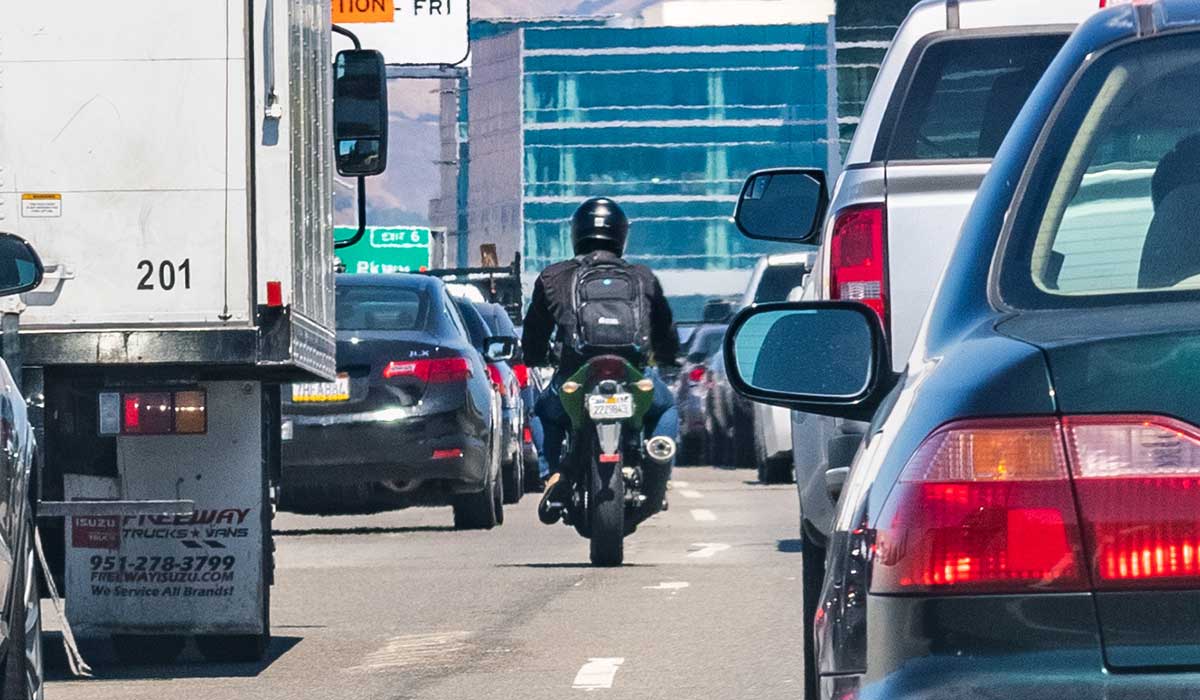
At a basic level, “lane filtering” occurs when a rider moves between two lanes of slow-moving or stopped traffic to get to the front of the intersection. The Utah Highway Patrol is being proactive about the new law, launching an awareness campaign to inform motorists a month and a half ahead of the change. The Utah Department of Safety released this video explaining the reasoning behind the law—allowing motorcycles to get out from in between traffic so they can avoid rear-end collisions—and how it should be applied. But despite these efforts, there has been considerable confusion about the new rules of the road. (This viral video sums up a lot of the questions surrounding how exactly riders should lane filter safely.)

Whether you’re living in the Beehive State, getting up to Tahoe sometime soon or want to keep up on the latest laws that affect riders, read this quick rundown on Utah’s lane filtering law to get some clarity.

Is Lane Splitting Legal in the US?

Utah is now only one of two U.S. states that allow motorcycles to bypass slower lanes of traffic. California, the state with the most riders on the road, allows motorcyclists to “lane split” by going between cars while moving at freeway speeds as traffic slows down on the roadway. Utah’s law differs from California’s approach, stating that motorcycles can only “filter” to the front of the intersection when cars are stopped. The confusion over the lane filtering law is understandable.

(Side note: Like Utah’s regulation, the California lane splitting law elicited confusion from the public. In one instance, the California Highway Patrol issued guidelines on safe lane splitting but had to remove them a few weeks later after someone complained that it didn’t have the authority to post the guidelines in the first place. If you’re interested, you can see the CHP’s response here.)

The new Utah law also lays out additional rules that motorcyclists must adhere to when lane filtering. According to the Utah Highway Patrol, motorists:

    1. Can move to the front of a traffic light on roads where the speed limit is 45 mph or less and there are two or more adjacent traffic lanes in the same direction of travel
    2. Can only move to the front when vehicles are stopped
    3. Can’t filter lanes at more than 15 mph

The law also states that maneuvering around lanes has to be done safely, which leaves some ambiguity about what exactly constitutes “safe” lane splitting. In the video mentioned earlier in this article (here’s the link again, just in case), the Utah Department of Public Safety attempts to show what safe lane filtering looks like. UHP Sgt. Nick Streets is optimistic, telling KSL, “I hope they use due diligence and care not to try to do it where they’re really going to be threading the needle to where they have a lane that’s wide enough to accommodate if their bike has saddlebags or longer handlebars. If you take off a car’s mirror, that’s on you. You’re going to have to stop, talk to the police and file an accident report.”

Is lane splitting safe?

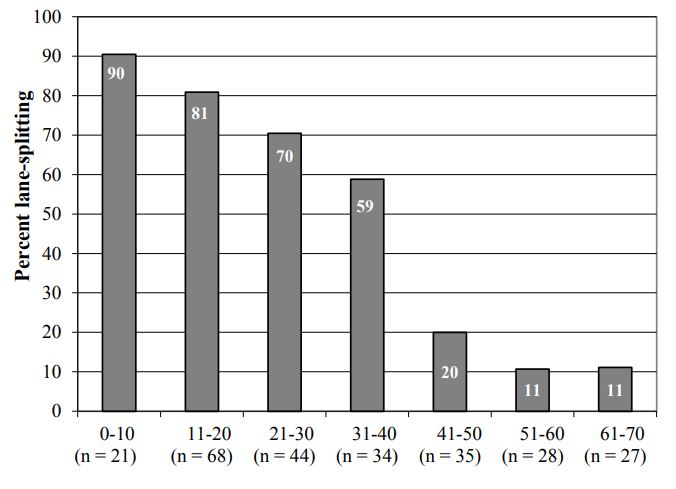
According to state statistics, more than 1,200 motorcyclists in Utah were rear-ended between 2011 to 2017. By the beginning of September 2018, there were

motorcycle lane splitting speed chart
Image courtesy of University of California Berkeley study

already more motorcycle deaths in Utah than in all of 2017. The majority of these occurred during the “100 Deadliest Days of Summer,” the period between Memorial Day and Labor Day.  Rear-end accidents often involve serious injury and, in some cases, even death.

The American Motorcycle Association has long held that lane splitting makes roads safer for riders and relieves traffic congestion, a view based largely on the successful use of the practice in California and a research study conducted by the University of California, Berkeley. Led by the university’s Safe Transportation Research and Education Center, the UC Berkley study found that lane filtering can be a safe practice if traffic is moving slower than 50 mph and riders aren’t moving more than 15 mph faster than the other vehicles on the road.

What do you think, should more states allow lane splitting? And as a rider, how would you define “safe” lane splitting?

Three Ways to Locate Your Motorcycle Barn Find

Posted By

Danny Reyes

Danny Reyes, Shipping Specialist, rider advocate and Angels fan. [email protected]


It’s every vintage motorcycle enthusiast’s dream: opening an old shed or garage and finding a perfectly preserved classic motorcycle, long forgotten or tucked away by its owner for safe-keeping. As vintage motorcycles command record prices at auctions and more riders gravitate toward the design style of decades past, the allure of the ever-elusive “barn find” is greater than ever. A quick search online will lead you to countless forums where passionate rummagers share their latest motorcycle finds–the good, the bad and, well, the just plain strange.

When you hear the words “barn find,” what comes to mind is likely something out of Indiana Jones or National Treasure. And it’s true that some finds are indeed worthy of the record books. Take, for instance, the French entrepreneur who dreamed of opening a classic car museum in the 1950s—until, that is, his finances didn’t pan out. What did he do with the 200-odd cars he had already collected to put in the museum that never was? After selling 50, he kept the remaining 150 in shacks and garages scattered around his family’s home. When someone found his stash decades later, it was a literal and figurative gold mine. A Ferrari 250GT SWB California Spider hidden under piles of old magazines sold at auction for more than $16.3M. In all, the sale broke 10 price records and included many other ultra-rare classic cars.

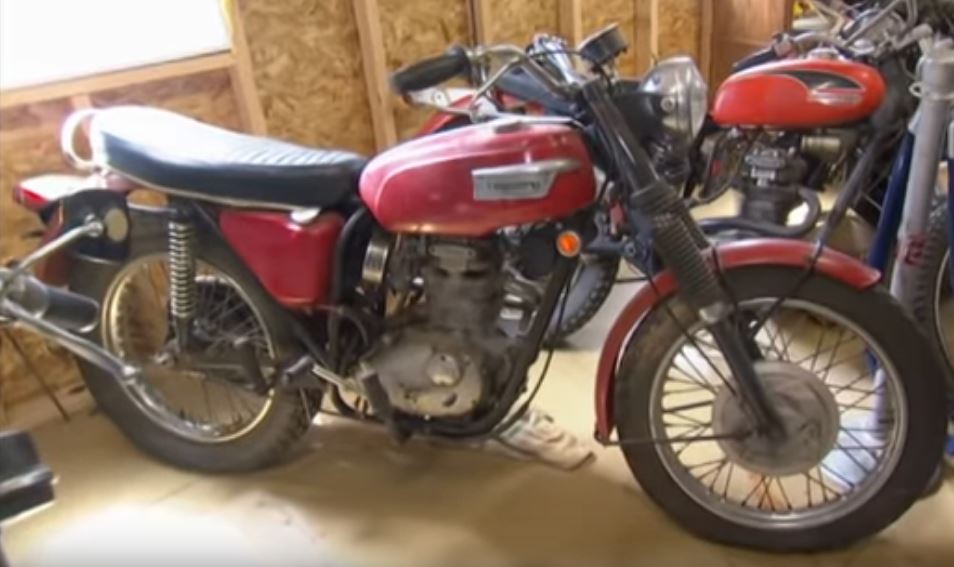
And you’ve likely heard similar stories about the greatest vintage motorcycle “barn finds.” (Check out this American Pickers video, where the pickers find, among other rides, a 1972 cherry red Triumph in good running condition.)

It’s no secret that vintage motorcycles are a coveted ride. Fully restored vintage and classic bikes can fetch top dollar, driving some people to scour the four corners of the Earth in hopes of finding old and forgotten treasures tucked away in storage somewhere, even if they are project bikes in need of restoration. For others, it might be more about the thrill of the hunt—which, given the rarity of finding a vintage bike in mint condition, is a mindset that will set you up for a lot less frustration. But no matter your reason for hunting down that ever-elusive “barn find,” use these tips to make sure no stone is left unturned.

RIDE

One of the easiest ways to stumble across “barn finds” is to do what you got a motorcycle for in the first place: ride. Hit the open road and keep your eyes open; you never know what you may find. Motorcycles with “For Sale” signs. Signs for farm auctions. Even an open garage filled with some old bikes in a residential area. For the serious barnstormer, these are all opportunities worth investigating.

As you’re riding, don’t forget to explore areas outside of your typical route. As many deal hunters will tell you, it’s often down quiet country roads or off the beaten path where you spot the best finds.

What happens if you do, in fact, strike gold as you ride along those country roads? Make sure to take photos of what you find, which can act as a reference if you need to do some research to negotiate a possible purchase price.

Using the “get out and ride” strategy won’t deliver a “barn find” every time. But if you keep your eyes open and aren’t afraid to pull over when you spot a lead, you’ll almost always come back with a story—or, at very least, a great ride.

TALK

Barnfinds.com outlines two rules for motorcycle barn finding (which, if you think about it, is really just one rule): talk about old motorcycles with everyone and anyone you come across. Any person you meet could be a potential lead. This may sound more like a business networking pitch than a “barn find” strategy, but the beauty of the “barn find” is that you never know when or where they’ll come up. Mark Bryan, whose profession is to scour the globe for vintage motorcycles for H&H Classic Auctions, echoes this advice. He says part of his luck is “being in the right place at the right time.” But there’s also another part of the equation, he says: “Getting out to as many bike nights and weekends as my family will allow.”

In the world of “barn finds,” one man’s trash literally is another man’s treasure, and you’ll never know who might have an old motorcycle stored away somewhere until you ask. Talk to the person who comes to repair something at your home. Chat about your new hobby with your coworkers at the office. Beyond local riders and riding groups, connect with shop owners and other people who know your area well. The more people they know, the more likely they are to connect you with a solid lead on your next “barn find.”

SURF

If you’re reading this blog, you already know that the Internet can drastically open the range of your search from the comfort of home. There are a number places to start: Craigslist, The Greensheet, Facebook marketplace, eBay and a growing number of resell apps like LetGo and OfferUp. There’s also NextDoor, which gives you the bonus of scouring listings from people you know—and posting a message telling people in your neighborhood about your hunt for motorcycle “barn finds.”

But don’t let the wide scope of the World Wide Web trick you into overlooking the power of good old-fashioned newspapers. Some people do still read newspapers, and placing a classified ad in print and also online makes sure your bases are covered. The website 50states.com has links to more than 3,300 local newspapers in the U.S. (If you want to expand your search internationally, start by seeking out foreign auctions and global websites like barnfinds.com, which has an international user base.)

What happens if you uncover your first “barn find” in another state? Motorcycle Shippers is here to get your motorcycle from Point A to Point B safely, in less time and with less hassle. And whether or not you need to ship your “barn find,” share a photo and your story with our rider community on social media.

Legal Aspects of Selling Your Motorcycle | 2024 Guide

Guest Posted By

Stewart Dunlop

Stewart Dunlop, a content manager working with LegalZoom. In his free time, he likes to play football and read Stephen King’s novels.


Legal Aspects To Pay Attention To When Selling Your Motorcycle

Selling your motorcycle is, admittedly, a moment of sadness and happiness. Sad because you’re finally letting go of one of your most prized possessions. And happy since you now get the chance to get rid of an old bike, then perhaps upgrade to a much better one in the near future.

Whichever side you lean towards, the end result depends on not only the condition and price of the motorcycle, but also how you handle the entire sale process.

Thankfully, selling a motorcycle isn’t difficult at all. It’s a pretty straightforward process. But, it could go sideways if you fail to apply the law accordingly.

You might, for instance, get swindled and end up losing the motorcycle without any form of payment. According to the National Insurance Crime Bureau, there are more than 40,000 new motorcycle theft cases each year. And to make matters worse, the corresponding recovery rate is alarmingly low. Only about 39% of them are ultimately found and repossessed.

Image credit to RMJ https://www.ruggedmotorbikejeans.com/blogs/motoblog

That’s just the tip of the iceberg. Following the due process doesn’t only protect you against such risks, but also helps you sell much faster as the buyer will know that you are a legitimate seller.

To help you, here are the top legal aspects to pay attention to while selling your motorcycle:

Image Source: Pixabay

Get the Paperwork Right

You might consider skipping the cumbersome selling process and instead, trade-in your motorcycle with a seasoned dealership. Not a bad idea, but when you come to think of it, such a deal may not result in the highest sales price possible.

To get the best out of your motorcycle, you need to sell it yourself. And that requires a couple of legal documents.

For starters, you need the motorcycle’s title. Titles are the single most important proof of ownership when it comes to vehicles in the US. Without one, you won’t be able to transfer ownership of the motorcycle to its buyer. And that would, of course, mean dropping the whole deal altogether.

The second most critical document is the Bill of Sale. You can think of it as the sale agreement since it outlines all the purchase details. More specifically, it identifies all the parties involved as well as the accompanying ownership conditions. You can easily get yourself one from this online form.

Way before you finalize the sale of the motorcycle, however, you might consider accepting an initial deposit payment. It’s a clever way of forcing the buyer to commit to the sale in advance. And to formalize it, you need what we call a Motorcycle Sale Holding Agreement.

The other thing that may possibly come up is a test drive request. Of course, you’d prefer leaving it out of the sale negotiation. No one would want to have multiple strangers taking rides with their precious motorcycle. But, a test drive is inevitable if you need to convince prospective buyers about the motorcycle’s condition.

So, you might also want to throw in a Motorcycle Test Drive Agreement into your paperwork. It should protect you if things go wrong during the test session.

Confirm Your Motorcycle’s Registration Details

Each state has a DMV (Department of Motor Vehicles) handling, among other things, registration of vehicles. In Florida, for instance, motorcycles and other vehicles are registered by the Florida Highway Safety and Motor Vehicles (FLHSMV) department.

Consider conducting a vehicle information check from your state’s DMV. You just need the title number plus the corresponding VIN, and the system will automatically generate your motorcycle’s registration details.

From that alone, you should be able to track information about the motorcycle’s previous owners, any unsettled lien on the bike, as well as your personal details. Scan the whole document for possible errors, before saving it for scrutiny by prospective buyers.

But, if it turns out that there are errors on the document, you can proceed to raise the issue with the DMV, and have it resolved as soon as possible.

Verify Credentials Before Test Rides

The test ride agreement is just one aspect of a motorcycle test ride. For the whole exercise to be considered legal, you need to first verify your prospective buyer’s credentials.

Do they have a motorcycle license or endorsement? Are they wearing a proper DOT-approved motorcycle helmet? Is it accompanied by the right safety gear?

In short, simply ensure anyone who attempts to test ride your motorcycle is adequately experienced and, follows the standard motorcycle safety laws in your state. Remember, if the prospective buyer were to be stopped by the police during the test ride, and they were not properly licensed, your motorcycle could be impounded and towed.

Finalize the Sale Accordingly

If you have all the documents ready and you’ve come to a mutual understanding on the price, you can proceed to finalize the sale of the motorcycle.

Don’t make the mistake of rushing the process through. Conduct the transaction diligently as you verify every single detail involved. Be honest with your potential buyer, especially if that person has never owned a motorcycle before. Share important information about motorcycle maintenance, discuss post-sale hidden costs a new buyer may not anticipate.

When it comes to payment, for instance, establish if the mode used is genuine before eventually transferring ownership of the motorcycle. Money orders and cashier’s checks are some of the safest cashless payment models you could use, but you should still have that form of payment verified by the bank before you release your bike to the new owner. Otherwise, you could also settle for PayPal or by far the most safest of all, the bank wire transfer.

And as you sign the corresponding sale documents, ensure you retain a copy of every single one of them for future reference. Many states require that complete a vehicle release of liability form and remit such to their motor vehicle department. This step is crucial as  unless you have proof that the motorcycle has been transferred to a new owner, you may still be liable for citations, fines and or accidents that occur.

When everything’s done, you should return the license plate to the DMV. They’ll, in turn, issue you a receipt, which you should keep for the long haul.

Ship Your Motorcycle to a New Buyer

If you need to deliver your motorcycle to a new place, you might consider motorcycle shipping services. You won’t be thinking about the best way to deliver or give your motorcycle, the company relieves you from this headache and all you have to do is focus on a nice and smooth sale process.


Science Just Validated What Motorcyclists Have Always Known

Posted By

Clint Lawrence

Clint Lawrence, founder of Motorcycle Shippers. Helping give riders more freedom to enjoy the bikes they love. [email protected]


If you ask 100 motorcycle riders how riding makes them feel, I’d be willing to bet that a majority of them describe a “pick me up” or peace of mind they can’t get anywhere else.

Reddit has an entire thread devoted to how riding makes people feel. Brian Steuber, a former U.S. Army staff sergeant, describes the rush this way: “My medical prescription is 800-plus pounds of American-made metal and chrome. No drug can compare; no feeling is better. That’s why I ride.” And then there’s Dan Aykroyd, who once said, “You do not need a therapist if you own a motorcycle, any kind of motorcycle!”

Maybe it’s the surge of adrenaline or that sheer feeling of freedom. It could be the thrill of hitting the road with your riding buddies—or, if you prefer going it lone wolf, the moments of solitude away from the rest of the world. But no matter how riding makes you feel, the impact of a good ride is unmistakable.motorcyclist riding on a two lane highway

Riders instinctively know that the best cure for a tough day is two wheels and an open road. Still, research about the mental benefits of riding a motorcycle has been surprisingly spotty at best. That is, until earlier this year, when Harley-Davidson America funded a study to explore how riding affects our brains.

After decades of relative radio silence, science is now confirming what riders have known all along: getting on a motorcycle is good for your mood.

A quick rundown of the UCLA-Harley motorcycle study

In the recent University of California, Los Angeles study funded by Harley, researchers recorded the brain activity and hormone levels of more than 50 riders. The scientists tracked brain activity before motorcycles hit the road, mid-ride and afterward—plus while they were driving a car and relaxing. The ride was 22 miles, in normal weather conditions, and all participants rode their own motorcycles.Motorcycles Parked in Front of an Old General Store

Here’s what the researchers found: A motorcycle ride decreased the participants’ stress biomarkers by almost 30%. Riding for 20 minutes boosted their heart rates by more than 10% and adrenaline by 27%—similar to the effect of getting light exercise. (Check out this article we wrote on the health benefits of riding a motorcycle, from a stronger core to better stability.)

Meanwhile, the EEG detecting the riders’ brain activity found that the ride did more good than just getting their cortisol under control—though that’s pretty significant to begin with. Changes in brain activity showed that the riders were more alert and less likely to be distracted, similar to what happens when you drink a cup of coffee.

It might feel like a bummer that Harley is planning to use the study to sell more motorcycles.

But if that news gets you down, at least there’s a science-backed remedy for easing your worried mind: going out for a ride.